
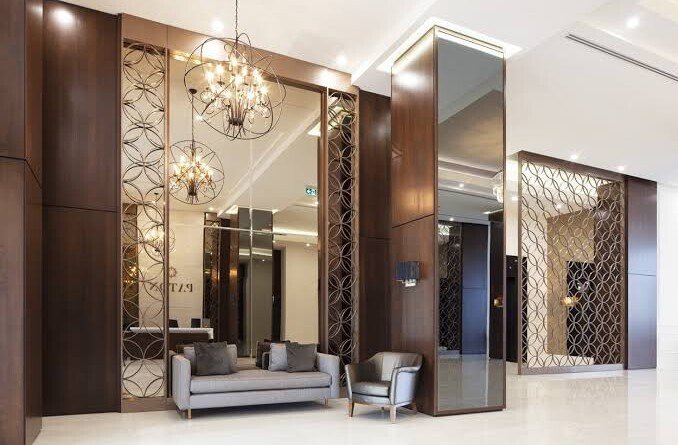
How Mirrors Can Help Bring More Light Into Your Home
Natural light casamaria can have a powerful effect on an interior. Bright rooms often feel more welcoming, spacious, and comfortable, while dark spaces can sometimes appear smaller and less inviting.
Windows are the primary source of natural light, but mirrors can help distribute that light throughout a room.
When positioned thoughtfully, a decorative mirror can become an effective tool for improving the visual brightness of an interior.
How Reflection Changes a Room
Mirrors work by reflecting the light and surroundings already present in a room.
This means that their placement can influence how light moves visually through the space.
A mirror positioned near a window can reflect daylight toward another part of the room. The result can make the interior appear brighter without adding another light source.
Place Mirrors Near Windows
One of the simplest strategies is to position a mirror near a window.
The mirror can capture the daylight entering the room and reflect it into the surrounding space.
However, the exact position matters.
Experimenting with different angles can help determine which placement produces the most attractive reflection.
Use Mirrors in Dark Hallways
Hallways often have limited access to natural light.
A decorative mirror can help make these spaces feel brighter and more open.
A long mirror placed along a hallway wall can reflect nearby lighting and create additional visual depth.
This is particularly useful in narrow entrances where the space might otherwise feel enclosed.
Brightening a Living Room
Living rooms usually provide more opportunities for decorative mirror placement.
A large mirror positioned opposite or adjacent to a window can reflect natural light while also becoming a statement feature.
The reflection can include plants, furniture, artwork, or architectural details, adding another visual layer to the room.
Choosing the Right Size
The size of the mirror influences how much of the surrounding environment it reflects.
A larger mirror generally creates a stronger visual impact, but it should still be proportional to the room.
Oversized mirrors can work beautifully in spacious living rooms, while smaller mirrors may be more appropriate for compact areas.
Consider What the Mirror Reflects
Reflection is not automatically beneficial.
Before installing a mirror, look carefully at what will appear in it.
A beautiful window view, decorative plant, artwork, or well-organized part of the room can create an attractive reflection.
On the other hand, reflecting clutter or an unattractive area may have the opposite effect.
Combine Mirrors With Artificial Lighting
Mirrors can also work with artificial light.
A decorative lamp reflected in a mirror can create the impression of additional illumination. This can be particularly useful during the evening.
LED mirrors take this idea further by incorporating lighting directly into the mirror design.
The combination of reflection and illumination can create a sophisticated atmosphere.
Mirrors and Small Apartments
Small apartments can benefit significantly from strategic mirror placement.
Limited windows and compact floor plans can sometimes make rooms feel darker or more confined.
A well-positioned mirror can reflect available light and create the perception of greater depth.
This makes mirrors a popular choice for apartments, studios, and other compact living spaces.
Don’t Overdo It
Although mirrors can be useful, more is not always better.
Using too many mirrors can make an interior feel visually confusing.
Instead, focus on one or two carefully selected pieces and consider how they interact with the existing layout.
A single large decorative mirror can often create more impact than several small mirrors placed without a clear purpose.
Final Thoughts
Mirrors are a simple but powerful interior design tool.
They can reflect natural daylight, enhance artificial lighting, create depth, and make rooms appear more open.
By considering placement, size, shape, and reflection, homeowners can use decorative mirrors to improve not only the appearance of their interiors but also the way light moves through their homes.
